The Taj Mahal’s Hidden Economic Power: How India’s Most Famous Monument Supports Agra
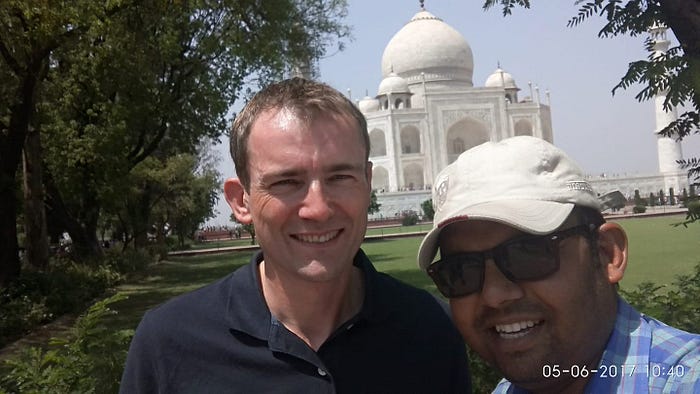
The Taj Mahal is famous around the world for its beauty, architecture and timeless history. Millions of travellers come to Agra to see the monument, photograph it and experience one of India's most celebrated heritage sites.
But there is another story behind the Taj Mahal that is often overlooked.
The Taj Mahal is not only a monument—it is also a major driver of tourism and economic activity in Agra.
The money collected from visitors at the monument is only one part of the story. The much larger impact comes from the tourists who travel to Agra and spend money on hotels, restaurants, transportation, guides, shopping and other local services.
That makes the Taj Mahal an important part of Agra's tourism economy.

How Many People Visit the Taj Mahal?
The scale of the Taj Mahal's popularity is enormous.
According to the Ministry of Tourism's India Tourism Statistics, the Taj Mahal attracted more than 5 million domestic visitors and nearly 397,000 foreign visitors in 2022–23.
More recent government data shows that in 2024–25, approximately 6.26 million domestic visitors and 645,000 foreign visitors visited the monument.
These numbers show why the Taj Mahal is so important to Agra's tourism industry.
Every visitor represents more than an entry ticket.
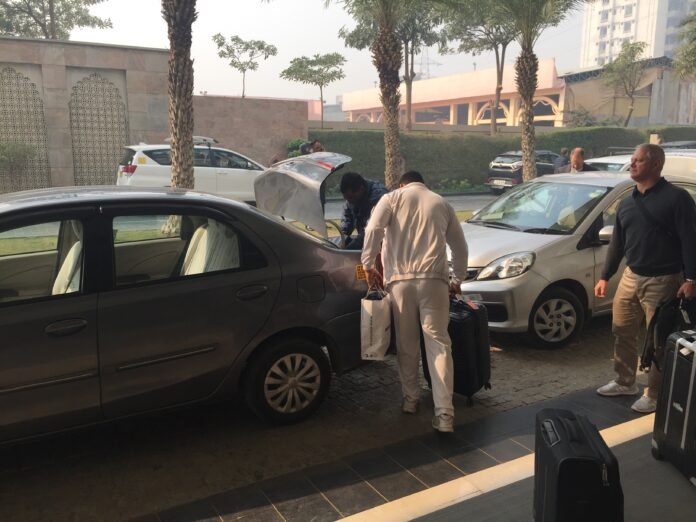
A traveller arriving in Agra may need accommodation, food, local transportation and other services. Many visitors also explore additional attractions, shop for souvenirs and handicrafts, and spend money in local markets.
This creates a much wider economic chain.
.png)
The Taj Mahal's Ticket Revenue Is Only One Part of the Story
It is easy to look at the money collected from Taj Mahal tickets and assume that this represents the monument's total economic value.
It does not.
Government data released through the Press Information Bureau shows that the Taj Mahal generated approximately ₹21.24 crore in ticket revenue in 2022–23, ₹17.88 crore in 2023–24, and ₹49.68 crore in 2024–25.
These are direct revenues collected from visitors.
But a tourist's total expenditure in Agra can include many other things.
For example, a visitor may pay for:
A hotel or guest house
Breakfast, lunch and dinner
A taxi, auto-rickshaw or e-rickshaw
A local tour guide
Entry to other attractions
Souvenirs and handicrafts
Photography and other tourist services
Therefore, the economic impact of the Taj Mahal should not be confused with its ticket revenue.
There is no reliable government figure that allows us to say that the Taj Mahal itself generates a specific amount such as “thousands of crores” every year for Agra. Such a claim would require a detailed economic-impact study.
What we can say with confidence is that the monument attracts millions of visitors whose spending contributes to Agra's wider tourism economy.

One Tourist Can Support Many Local Businesses
Consider a simple example.
Imagine a family travelling to Agra for the Taj Mahal.
They book a hotel for two nights. They hire local transportation. They eat at restaurants, visit other historical places and buy a few souvenirs before returning home.
The money they spend does not remain with one business.
The hotel receives payment.
The hotel employee earns a salary.
The restaurant receives money for meals.
The driver earns from transportation.
The shopkeeper earns from the sale.
An artisan may benefit from the sale of a handicraft.
This is the tourism multiplier effect in simple terms.
The Taj Mahal attracts the visitor, and the visitor's spending then moves through different parts of the local economy.
Hotels, Restaurants and Transport Depend on Tourism
Agra's tourism industry includes a wide variety of businesses.
Hotels and guest houses need visitors to fill their rooms. Restaurants depend on travellers looking for meals. Taxi and auto-rickshaw operators transport visitors around the city.
Tour guides help tourists understand Agra's history and architecture.
Local shops sell souvenirs, handicrafts, textiles and other products.
The city's famous marble handicraft tradition is also closely associated with Agra's identity as a tourist destination.
Of course, it would be incorrect to say that all of these businesses depend exclusively on the Taj Mahal. Agra has several important attractions, and local businesses also serve residents and other types of visitors.
However, the Taj Mahal remains one of the city's most powerful tourism attractions.
The Taj Mahal Helps Put Agra on the Global Tourism Map
Agra has a remarkable historical heritage, but the Taj Mahal is undoubtedly its most recognisable international symbol.
For many international travellers, visiting the Taj Mahal is one of the highlights of a trip to India.
That global reputation creates a powerful reason for people to travel to Agra.
And once they arrive, they contribute to the wider tourism ecosystem.
This is why the economic importance of a famous heritage monument cannot be measured only by the amount of money collected at its entrance.
Its ability to attract people to a destination can be just as important.

Tourism Is a Major Part of India's Economy
The Taj Mahal's economic story is also connected to India's much larger tourism industry.
According to the Ministry of Tourism, tourism accounted for an estimated 5.22% of India's GDP in 2023–24. Direct and indirect tourism-related employment was estimated at approximately 84.63 million jobs, or about 8.46 crore.
These are national figures—not figures for Agra or the Taj Mahal.
They should therefore not be interpreted as meaning that 8.46 crore people depend on the Taj Mahal.
Instead, they demonstrate the enormous scale of tourism as an economic activity across India.
The Taj Mahal is one important attraction within that much larger tourism sector.
The Taj Mahal and Agra's Wider Tourism Economy
Agra is more than the Taj Mahal.
Visitors can also explore Agra Fort, Itmad-ud-Daulah, Mehtab Bagh, Fatehpur Sikri and other historical and cultural attractions.
That means not every tourist expenditure in Agra can be attributed directly to the Taj Mahal.
Nevertheless, the Taj Mahal plays a central role in attracting visitors to the city.
For travellers planning their trip, practical information can make the experience much easier. If you are planning your own visit, you can read this useful guide on the Best Time to Visit the Taj Mahal before deciding when to travel.
And if you are wondering about transportation, trains, flights and road connections, this guide explains How to Reach Agra.
A Monument That Has Survived for Centuries
The Taj Mahal was commissioned by Mughal Emperor Shah Jahan in the 17th century as a mausoleum for Mumtaz Mahal.
More than three centuries later, it continues to attract visitors from across India and around the world.
Its importance is therefore not limited to architecture or history.
It is also part of a living tourism economy.
People working in hotels, restaurants, transportation, guiding, handicrafts and other visitor-related businesses all participate in the economic activity created by tourism in Agra.
The Taj Mahal does not single-handedly create every one of these jobs, but its ability to attract visitors is an important part of the ecosystem.
The Taj Mahal Has an Economic Value Beyond Its Ticket Price
The easiest way to understand the Taj Mahal's economic importance is to look beyond the entrance gate.
A ticket generates direct revenue.
A tourist generates much more than that.
The tourist may book a room, eat a meal, hire a driver, visit another attraction and purchase a local product.
Those transactions support businesses.
Businesses employ people.
Workers earn incomes.
And those incomes are spent again within the economy.
This is why the economic value of heritage tourism can be much broader than the revenue earned by the monument itself.

Why Protecting the Taj Mahal Matters
Preserving the Taj Mahal is not simply about protecting a beautiful building from the past.
It is also about protecting an important cultural and tourism asset for the future.
A well-preserved heritage site can continue attracting visitors, supporting tourism businesses and creating opportunities for generations to come.
The challenge is to balance tourism with conservation.
The Taj Mahal must be protected from pollution, overcrowding and other pressures while remaining accessible to visitors.
Its long-term value depends on both.
A 17th-Century Monument With a 21st-Century Impact
The Taj Mahal was built centuries ago, but its story is still being written today.
Every year, millions of visitors come to Agra to see its white marble domes, gardens and architectural details.
They arrive for history, beauty and culture—but their presence also creates economic activity across the city.
That is the hidden economic power of the Taj Mahal.
Its value cannot be measured only by the price of an entry ticket.
The Taj Mahal attracts tourists, tourists support businesses, and those businesses form an important part of Agra's tourism economy.
And if you want to explore the history behind the monument, you can also read more about the Taj Mahal's history and why it became one of India's most famous monuments.
There is also a fascinating story about one of the most extraordinary attempts to profit from the monument in the past. You can read the story of the Englishman who wanted to break up and sell the Taj Mahal.
Centuries after Shah Jahan commissioned it, the Taj Mahal continues to attract people, create tourism activity and contribute to the economy of Agra.
Some monuments belong to history—but their impact can continue to be felt in the present.