Monday, August 23, 2010

History of Agra Before the Mughals | Lodi Dynasty & Early Agra

History of Agra Before the Mughals: Ancient Traditions, Early Agra and the Lodi Dynasty

When people hear the name Agra, the first image that usually comes to mind is the Taj Mahal.

But the history of Agra began long before Shah Jahan commissioned the famous marble mausoleum.

Long before the Taj Mahal, Agra was associated with ancient traditions, the Yamuna River, early settlements, regional rulers and the Delhi Sultanate. The city later became one of the most important political and cultural centers of medieval India.

For travelers visiting Agra today, understanding the city's history before the Mughals provides a much deeper appreciation of its famous monuments.

So, what was Agra like before the Mughal Empire?

And when did Agra become an important city?

Agra Before the Mughals

The history of Agra is complicated because several different traditions and historical periods are connected with the city.

The official District Agra history describes Agra as an ancient city associated with the Mahabharata tradition, while also stating that Sultan Sikandar Lodi founded Agra in 1504. The official Taj Mahal website similarly identifies Sikandar Lodi as the founder of modern Agra in the 16th century.

This distinction is important.

It means that when we talk about the "history of Agra," we should distinguish between:

  • Ancient traditions associated with the region

  • Early references to Agra

  • Traditional accounts of earlier settlements

  • The emergence of Agra as a major medieval city

  • The development of Agra under the Lodi dynasty

  • The transformation of Agra under the Mughals

The Taj Mahal represents only one chapter in this much longer story.

Agra and the Ancient Tradition of Agravana

The official Taj Mahal website says that Agra's earliest traditional association comes from the Mahabharata, where the area is referred to as Agravana, a Sanskrit name interpreted as a forest or grove. It also notes that the second-century Greek geographer Ptolemy referred to Agra by its modern name.

These references are important for understanding the antiquity of the region.

However, travelers should be careful about treating every ancient literary reference as proof of the exact location and continuous urban history of today's Agra.

Ancient traditions and modern historical evidence are not always identical.

A responsible history of Agra should therefore present these early references as part of the city's historical tradition rather than claiming that they prove the existence of the modern city in exactly the same form.

Why the Yamuna River Was Important

Agra developed beside the Yamuna River, one of the major rivers of northern India.

Its location was strategically valuable.

The river provided water, supported agriculture and influenced transportation and settlement patterns.

The location also connected Agra with important routes across northern India.

Centuries later, the Mughals would take full advantage of this setting.

The Taj Mahal, Agra Fort and several other major monuments were built along or near the Yamuna, making the river an important part of Agra's architectural landscape.

The Legend of Raja Badal Singh and Badalgarh

One of the most frequently repeated stories about the early history of Agra concerns Raja Badal Singh.

According to tradition and legend, Badal Singh is associated with a settlement around 1475 and with a fort known as Badalgarh, believed to have stood on or near the site of the later Agra Fort.

The Government of Uttar Pradesh's District Agra profile specifically describes the Badal Singh story as tradition and legend.

This distinction matters.

It is better to write:

"According to local tradition, Raja Badal Singh is associated with an earlier settlement and fort known as Badalgarh."

Rather than:

"Raja Badal Singh definitely founded Agra in 1475."

The second statement is too certain.

The history of Agra's earliest settlement is more complicated than a single founding date.

Early References to Agra

The District Agra profile also records an old literary tradition concerning a Persian poet and an attack on a fortress associated with Agra. It connects this tradition with Sultan Mahmud of Ghazni and a ruler named Jaipal.

This is an intriguing part of Agra's historical tradition.

However, early references to places and fortifications should be treated carefully because the identification of an ancient or medieval reference with the exact location and form of later Agra can be difficult.

For a modern travel article, the safest approach is to acknowledge these traditions while making clear which parts are firmly documented and which remain debated or traditional.

Agra Before the Delhi Sultanate

Before Agra became a major capital of the Delhi Sultanate, the wider region was influenced by different political powers and cultural traditions.

Northern India experienced repeated changes in political control during the medieval period.

The strategic location of the Yamuna-Gangetic region made settlements in and around Agra valuable to rulers seeking to control routes between northern and central India.

Agra's later importance did not appear suddenly.

It developed from a broader regional landscape before becoming an imperial city.

Sikandar Lodi and the Foundation of Medieval Agra

The most important turning point in the documented history of Agra came under Sultan Sikandar Lodi, ruler of the Lodi dynasty of the Delhi Sultanate.

The Government of Uttar Pradesh states that Sikandar Lodi founded Agra in 1504. The official Taj Mahal website also identifies him as the founder of modern Agra in the 16th century.

This is one of the most important dates in the history of Agra.

Sikandar Lodi recognized the strategic importance of the location and developed Agra as an important political center.

From this point, Agra's history becomes much easier to follow through documented political events.

Why Did Sikandar Lodi Choose Agra?

Agra's location beside the Yamuna was one important advantage.

The city also occupied a strategic position within northern India.

From Agra, the Lodi rulers could manage territories and routes extending across the region.

The city's development under Sikandar Lodi helped transform Agra from a location associated with older traditions into a major center of political power.

This laid the foundation for the city's later importance under the Mughals.

Ibrahim Lodi and Agra

After Sikandar Lodi died, his son Ibrahim Lodi succeeded him.

Agra remained an important center during Ibrahim Lodi's rule.

The District Agra history states that Ibrahim Lodi ruled his sultanate from Agra until his defeat by Babur at the First Battle of Panipat in 1526.

This battle changed the history of northern India.

It also transformed the future of Agra.

The First Battle of Panipat and the Arrival of Babur

In 1526, Babur, the founder of the Mughal dynasty in India, defeated Ibrahim Lodi at the First Battle of Panipat.

The victory opened the way for Babur to establish Mughal power in northern India.

Agra subsequently became one of the most important centers of the new Mughal Empire.

The official Taj Mahal website describes the Battle of Panipat as a turning point in the establishment of Mughal power in Agra.

This is where the story changes from pre-Mughal Agra to Mughal Agra.

Babur and the Development of Agra

Babur brought new architectural and garden traditions to the city.

The official Taj Mahal website credits Babur with laying out one of the earliest formal Persian-style gardens on the banks of the Yamuna.

This tradition would become extremely important in later Mughal architecture.

Mughal gardens were not simply places of beauty.

They combined:

  • Geometry

  • Water

  • Plants

  • Architecture

  • Symmetry

  • Landscape design

The development of these gardens helped establish the visual language that would eventually become associated with Mughal Agra.

From Lodi Agra to Mughal Agra

The transition from the Lodi dynasty to the Mughal Empire was not simply a change of rulers.

It marked a transformation in Agra's architecture, political importance and cultural identity.

Under the Mughals, Agra developed into a major imperial capital.

The city would eventually become associated with some of the most important monuments in Indian history.

These included:

  • Agra Fort

  • Akbar's Tomb at Sikandra

  • Itmad-ud-Daulah's Tomb

  • Mughal gardens

  • The Taj Mahal

But none of these monuments can be fully understood without first understanding the earlier history of the city.

Why Agra Fort Matters to the Story

The later Agra Fort stands as one of the clearest physical reminders of the city's transformation under the Mughals.

The official Taj Mahal website explains that the fort was rebuilt in red sandstone under Emperor Akbar, beginning in 1565, and was later developed by Shah Jahan.

The fort therefore belongs to a later period than the Lodi foundation of Agra.

But its location connects the Mughal city with the earlier strategic importance of the Yamuna and the area.

Today, the fort is one of Agra's most important historic attractions.

A Lodi Connection Still Visible Near Sikandra

Agra's pre-Mughal history is not completely hidden beneath later Mughal monuments.

The official Taj Mahal website notes that the ground floor of the Tomb of Mariam-uz-Zamani near Sikandra incorporates a Lodi-era baradari with chambers associated with the earlier period.

This is an excellent reminder that Agra's architectural history developed layer by layer.

Later Mughal structures did not erase everything that came before them.

Instead, different periods sometimes survive within the same landscape.

Agra's Location and the Mughal Transformation

The Yamuna remained central to Agra's development.

The river shaped the location of major monuments and gardens.

Under the Mughals, the riverfront became an important part of imperial architecture.

Babur's gardens, Akbar's fort and Shah Jahan's Taj Mahal all belong to this long architectural evolution.

The Taj Mahal itself was therefore not the beginning of Agra's architectural story.

It was the extraordinary culmination of centuries of development.

When Did Agra Become a Major Imperial City?

Agra's rise as a major imperial city began before the Mughal period.

Sikandar Lodi's foundation of Agra in 1504 was a critical milestone.

Ibrahim Lodi continued to use the city.

Babur's victory in 1526 brought the city into the Mughal sphere.

Under Akbar, Jahangir and Shah Jahan, Agra reached an extraordinary level of political and architectural importance. The Government of Uttar Pradesh describes Agra as the capital of the Mughal Empire under these three emperors.

This is the historical bridge between medieval Agra and the city that international travelers recognize today.

Akbarabad: Agra Under the Mughals

During the Mughal period, Agra was also known as Akbarabad.

The city became one of the empire's most important centers.

Akbar developed the city and its fort.

Jahangir continued the imperial tradition.

Shah Jahan later transformed Agra's architecture through his extraordinary interest in marble, symmetry and monumental design.

The city became a showcase of Mughal power.

From Agra Before the Mughals to the Taj Mahal

By the time Shah Jahan commissioned the Taj Mahal, Agra had already experienced centuries of political and architectural development.

The Taj Mahal was therefore built in a city that already had:

  • A strategic river location

  • A long political history

  • Lodi foundations

  • Mughal imperial institutions

  • Fortifications

  • Gardens

  • Palaces

  • Skilled craftsmen

  • A sophisticated architectural tradition

The Taj Mahal was the spectacular continuation of this story.

For travelers who want to explore how Agra developed into the city of the Taj, the official history of the Taj Mahal provides useful background on the monument and its Mughal context.

Agra's History Is More Than the Taj Mahal

The Taj Mahal attracts millions of visitors because of its beauty and historical significance.

But limiting Agra's history to Shah Jahan would mean missing much of the city's story.

Before the Taj Mahal there was:

Ancient tradition

↓

Early references

↓

Regional settlements

↓

Lodi Agra

↓

Sikandar Lodi's foundation in 1504

↓

Ibrahim Lodi

↓

Babur and the First Battle of Panipat

↓

Mughal Agra

↓

Akbar, Jahangir and Shah Jahan

↓

The Taj Mahal

This timeline shows how the city developed over centuries.

What International Travelers Should Know

For international visitors, Agra can sometimes appear to be a city built around one monument.

It is much more than that.

A traveler who understands the city's history can see connections between monuments that might otherwise appear unrelated.

For example:

  • Agra Fort reveals the military and imperial power of the Mughals.

  • Akbar's Tomb at Sikandra demonstrates the evolution of Mughal architecture.

  • Mariam-uz-Zamani's Tomb preserves elements of earlier Lodi architecture.

  • Ram Bagh connects visitors with early Mughal garden traditions.

  • The Taj Mahal represents the extraordinary architectural culture of Shah Jahan's reign.

The official District Agra tourism information also highlights Agra's wider collection of historic monuments beyond the Taj Mahal.

Visiting Agra With Historical Context

If you are visiting Agra for the first time, don't think of your trip as simply:

“Delhi → Taj Mahal → Delhi.”

Think of it as a journey through several centuries of Indian history.

Start by understanding the early city.

Then learn about the Lodi dynasty.

Follow the story to Babur and the Mughal conquest.

Explore Akbar's Agra.

Then see how Jahangir and Shah Jahan transformed the city.

Finally, stand before the Taj Mahal.

The monument becomes much more meaningful when you understand the city that existed before it.

Why the Pre-Mughal History of Agra Matters

The history of Agra before the Mughals helps answer an important question:

Why did the Mughals choose Agra as such an important imperial center?

The answer lies partly in geography, political history and the city's development under the Lodis.

Sikandar Lodi's establishment of Agra as a major political center created a foundation that the Mughals could later expand dramatically.

The Mughals did not create Agra's importance from nothing.

They inherited and transformed an already significant city.

Final Thoughts

The history of Agra did not begin with the Taj Mahal.

Ancient traditions connect the region with Agravana, while later historical traditions and evidence point to a long development along the Yamuna.

The story of Raja Badal Singh and Badalgarh belongs to local tradition and should not be presented as an unquestionable founding fact.

The more securely documented turning point came in 1504, when Sultan Sikandar Lodi founded or established Agra as a major city of the Delhi Sultanate.

His son Ibrahim Lodi continued to rule from Agra until Babur defeated him at the First Battle of Panipat in 1526.

The arrival of Babur marked the beginning of the Mughal transformation of Agra.

Under Akbar, Jahangir and Shah Jahan, the city became one of the great centers of Mughal power and architecture.

And eventually, Shah Jahan's Taj Mahal made Agra famous throughout the world.

But the next time you look at the Taj Mahal, remember:

Agra was already old before the Taj Mahal was built.

Its story stretches from ancient traditions and the Yamuna landscape to the Lodis, Babur and the great Mughal emperors.

The Taj Mahal is not the beginning of Agra's history.

It is one of the greatest chapters in a story that began centuries earlier. 

Who Designed the Taj Mahal? Ustad Ahmad Lahori & Shah Jahan


Who Designed the Taj Mahal? Ustad Ahmad Lahori, Shah Jahan and the Master Craftsmen

The Taj Mahal is one of the world's most recognizable monuments.

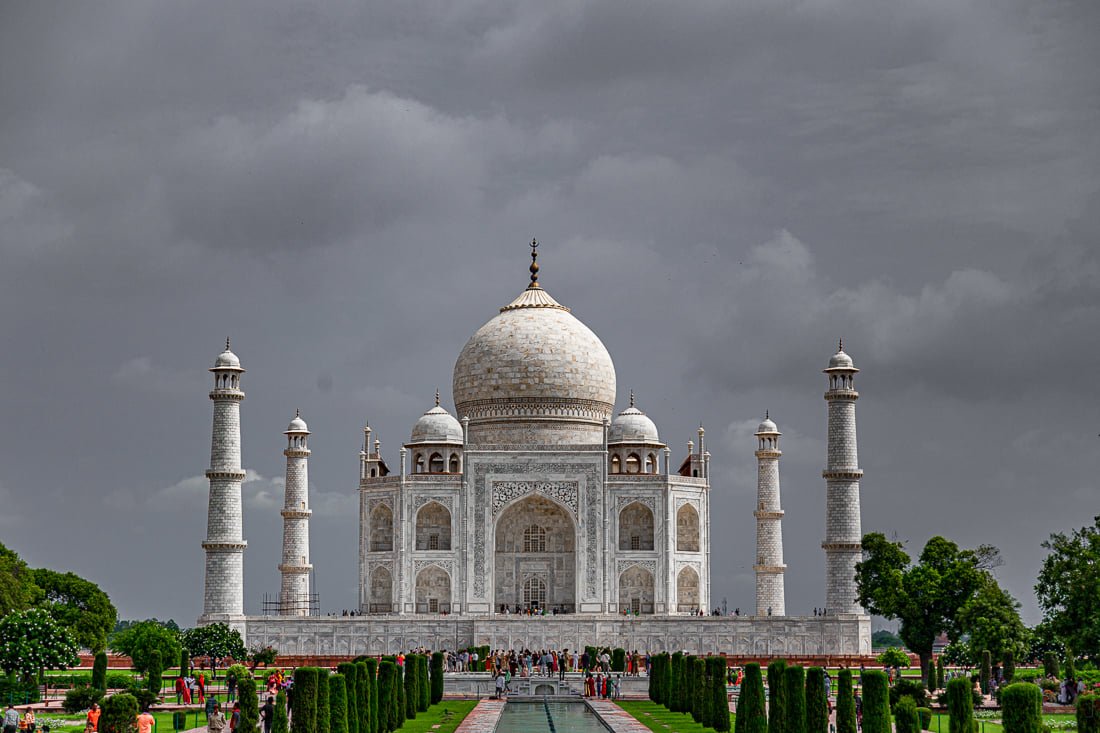
Its enormous white-marble dome, perfectly balanced gardens, delicate stone inlay and intricate calligraphy have fascinated travelers, architects and historians for centuries.

But one question continues to attract visitors:

Who designed the Taj Mahal?

The answer is more interesting than simply naming one person.

UNESCO identifies Ustad-Ahmad Lahori as the main architect of the Taj Mahal. At the same time, official Taj Mahal sources describe the monument as the result of a large team of architects, craftsmen, calligraphers, engineers, builders and specialists working under the patronage of Mughal Emperor Shah Jahan.

Understanding this distinction helps explain how one of the greatest architectural achievements of Mughal India was created.


Who Was the Main Architect of the Taj Mahal?

According to the UNESCO World Heritage Centre, Ustad-Ahmad Lahori was the main architect of the Taj Mahal.

His name is therefore the most important answer to the question:

“Who was the architect of the Taj Mahal?”

However, calling Lahori the main architect does not mean that he personally designed and built every part of the complex.

The Taj Mahal was a vast architectural project involving numerous specialists.

The official Taj Mahal website explains that the project involved a board of architects and a large creative and construction workforce. It names several individuals associated with different aspects of the monument.

Was Shah Jahan the Architect of the Taj Mahal?

No.

Shah Jahan was the Mughal emperor and patron who commissioned the Taj Mahal, rather than the professional architect responsible for its design.

He ordered the monument to be built in memory of his wife, Mumtaz Mahal, who died in 1631.

Construction of the Taj Mahal began around 1632, and the principal mausoleum was completed in 1648. Elements of the larger complex, including the mosque, guest house, main gateway and other structures, were completed later, with the broader complex reaching completion around 1653.

Shah Jahan's role was nevertheless enormous.

The Taj Mahal reflects the architectural vision and artistic culture of his reign, often called the high point of Shahjahani architecture.

What Did Ustad Ahmad Lahori Do?

Ustad-Ahmad Lahori is identified by UNESCO as the main architect of the Taj Mahal.

His role should be understood within the large Mughal building system of the seventeenth century.

A monument on the scale of the Taj Mahal required much more than a single architect.

It required people who could:

  • Plan buildings

  • Calculate proportions

  • Engineer foundations

  • Construct enormous domes

  • Cut and polish marble

  • Create stone inlay

  • Carve floral designs

  • Design gardens

  • Produce calligraphy

  • Manage construction

  • Transport materials

  • Supervise thousands of workers

The Taj Mahal was therefore a remarkable collaborative architectural achievement.


The Taj Mahal Was a Team Effort

The official Taj Mahal website states that history does not preserve a completely clear record of exactly who designed every element of the monument.

It explains that a team of architects was responsible for the design and supervision of the works, while several specialists are associated with particular parts of the complex.

This is important when discussing the Taj Mahal's architect.

Rather than asking only:

“Who designed the Taj Mahal?”

a better historical question is:

“Who led and contributed to the design and construction of the Taj Mahal?”

That gives a much more accurate picture.

Ustad Isa and Isa Muhammad Effendi

The official Taj Mahal website also credits Ustad Isa and Isa Muhammad Effendi of Persia with an important role in the architectural design.

Their names appear in historical discussions of the Taj Mahal's design and construction.

However, these attributions should not be used to contradict UNESCO's identification of Ustad-Ahmad Lahori as the main architect.

Instead, the different names demonstrate that the Taj Mahal was the product of a broader architectural and artistic team.

Ismail Khan and the Great Dome

The enormous central dome is one of the most recognizable features of the Taj Mahal.

The official Taj Mahal source associates Ismail Afandi, also known as Ismail Khan, with the design of the main dome.

The dome presented a major engineering challenge.

Its proportions had to work visually with the central mausoleum, the four minarets and the surrounding complex.

The result is one of the most recognizable silhouettes in world architecture.

Amanat Khan and the Taj Mahal's Calligraphy

Architecture is only part of the Taj Mahal's visual identity.

Visitors are often captivated by the Arabic calligraphy surrounding the gateways and marble surfaces.

The official Taj Mahal website identifies Amanat Khan of Shiraz as the chief calligrapher.

His signature appears on the monument.

The inscriptions were executed in Thuluth script, a major Islamic calligraphic style.

The official Taj Mahal website also identifies Qur'anic passages including Surah Ya-Sin, Surah Al-Mulk and other chapters among the inscriptions used throughout the monument.

This means that the Taj Mahal's calligraphy was not simply decorative lettering.

It was an important part of the monument's religious and artistic program.

What Material Was Used to Build the Taj Mahal?

The Taj Mahal is famous for its brilliant white marble.

Much of the principal mausoleum is clad in white marble from Makrana in Rajasthan. The monument also incorporates red sandstone and decorative stones used for inlay.

The official Taj Mahal information describes the use of numerous precious and semi-precious stones in the decorative work.

These materials were brought from different parts of India and beyond.

The combination of white marble, red sandstone and colorful inlay helped create the distinctive appearance associated with Mughal architecture under Shah Jahan.

Pietra Dura and the Craftsmanship of the Taj Mahal

One of the Taj Mahal's most remarkable artistic features is its pietra dura, or stone-inlay work.

Craftsmen carefully inserted colored stones into the marble to create flowers, plants and geometric designs.

The decoration is not merely painted onto the surface.

The colored stones form part of the marble itself.

This required exceptional precision.

A tiny error in cutting or fitting could affect the entire composition.

The floral designs are especially important because they demonstrate the combination of naturalistic decoration and geometric control characteristic of Shah Jahan's architectural style.


How Many People Worked on the Taj Mahal?

The Taj Mahal was not built by a small group of architects.

The official Taj Mahal website describes a workforce of approximately 20,000 workers and specialists involved in the project.

These included:

  • Masons

  • Stonecutters

  • Inlayers

  • Carvers

  • Painters

  • Calligraphers

  • Dome builders

  • Sculptors

  • Mosaicists

  • Supervisors

  • Engineers and other specialists

UNESCO similarly notes that craftsmen and specialists were brought from across the Mughal Empire as well as from Central Asia and Iran.

The Taj Mahal was therefore an international and multi-skilled construction project within the Mughal world.

Did the Taj Mahal Have Only One Architect?

This is where many online articles become confusing.

The simplest answer is:

Ustad-Ahmad Lahori is identified by UNESCO as the main architect, but the Taj Mahal was created through the work of a wider team.

Different specialists were responsible for different areas of expertise.

The official Taj Mahal sources associate:

Ustad-Ahmad Lahori — main architect according to UNESCO

Ustad Isa and Isa Muhammad Effendi — important architectural roles

Ismail Afandi / Ismail Khan — associated with the main dome

Amanat Khan of Shiraz — chief calligrapher

Qazim Khan — associated with the gold finial

Chiranjilal — associated with sculpture and mosaic work

Other supervisors, managers, craftsmen and artisans contributed to the enormous project.

This collaborative structure is one of the most important facts to understand about the Taj Mahal.

What About the European Architect Austin de Bordeaux?

Various historical stories have suggested that European architects or artists influenced the Taj Mahal.

These stories should be treated carefully.

The strongest reliable modern description does not require a European architect to explain the Taj Mahal's design.

UNESCO identifies Ustad-Ahmad Lahori as the main architect, while the official Taj Mahal material identifies a broader group of Mughal-era and foreign specialists involved in the work.

Therefore, it is better not to present stories about European architects as established facts unless supported by specific historical evidence.

Was the Taj Mahal Designed in the Persian Style?

The Taj Mahal reflects a combination of architectural traditions.

The official Taj Mahal website describes Mughal architecture as incorporating Persian, Indian and Islamic architectural influences.

This combination is one reason the monument is so important.

The Mughals had Central Asian and Persian cultural roots, but by Shah Jahan's period they had developed a highly sophisticated architectural language in India.

The Taj Mahal represents this mature Mughal style.

The Importance of Symmetry

One of the first things visitors notice about the Taj Mahal is its extraordinary symmetry.

The complex uses a carefully organized central axis.

The mausoleum, garden, gateway, mosque and guest house work together as parts of a larger composition.

The official Taj Mahal architectural material describes strict geometry, bilateral symmetry, proportional relationships and carefully controlled materials as important principles of Shahjahani architecture.

This is why the Taj Mahal appears balanced from almost every major viewpoint.

Why Are the Minarets Slightly Outside the Main Platform?

The four minarets are positioned at the corners of the main marble platform.

Their placement contributes to the overall symmetry of the monument.

They also create a visual frame around the central mausoleum.

The relationship between the dome, minarets and platform demonstrates how the architects used geometry to create a sense of stability and harmony.

The Taj Mahal as a Mughal Architectural Masterpiece

UNESCO describes the Taj Mahal as one of the greatest achievements of Indo-Islamic architecture.

Its significance comes from the combination of:

  • Architecture

  • Engineering

  • Geometry

  • Landscape design

  • Marble craftsmanship

  • Stone inlay

  • Calligraphy

  • Sculpture

  • Religious symbolism

  • Artistic planning

The monument is therefore much more than a marble tomb.

It is an integrated architectural complex.

The Taj Mahal Is More Than the White Dome

Many visitors think of the Taj Mahal as the white marble mausoleum alone.

But the Taj Mahal is actually a larger complex.

It includes:

  • The principal mausoleum

  • The mosque

  • The guest house

  • The main gateway

  • The garden

  • The surrounding structures

  • The forecourt and related elements

The official Taj Mahal website describes the monument as an integrated complex of structures, rather than simply a single building.

This is an important distinction for travelers who want to understand the monument properly.

Who Commissioned the Taj Mahal?

The Taj Mahal was commissioned by Emperor Shah Jahan in memory of Mumtaz Mahal.

Shah Jahan's interest in architecture was a defining characteristic of his reign.

The Taj Mahal represents the culmination of many architectural ideas that had developed under earlier Mughal rulers.

Its design therefore belongs to both a particular emperor and a much longer architectural tradition.

Shah Jahan's Role in the Taj Mahal

Although Shah Jahan was not the professional architect, his role was fundamental.

He was the patron and emperor behind the project.

The monument reflects the artistic ambitions and imperial culture of his reign.

The official Taj Mahal architectural material describes the monument as an expression of Shah Jahan's strong interest in architecture and artistic innovation.

So the most accurate way to describe the relationship is:

Shah Jahan commissioned and patronized the Taj Mahal, while Ustad-Ahmad Lahori is identified by UNESCO as its main architect, supported by a large team of specialists.

A Monument Built by Many Hands

The Taj Mahal is often described as a symbol of love.

It can also be understood as a symbol of extraordinary human collaboration.

Architects planned it.

Engineers solved structural problems.

Stonecutters prepared the marble.

Inlayers created delicate floral designs.

Calligraphers created the inscriptions.

Garden specialists shaped the landscape.

Builders raised the dome and minarets.

Thousands of workers transformed architectural plans into a physical monument.

That collective craftsmanship is one of the reasons the Taj Mahal remains so extraordinary.

Why the Architect Question Still Matters

Asking who designed the Taj Mahal is not simply a search for a name.

It reveals how major monuments were created in the Mughal world.

The Taj Mahal was not the work of one isolated genius working alone.

It was the result of:

Patronage + architecture + engineering + craftsmanship + mathematics + calligraphy + landscape design.

Ustad-Ahmad Lahori's identification as the main architect gives us an important name.

The wider team explains how such an extraordinary monument could actually be built.

Visiting the Taj Mahal With a Deeper Understanding

For international travelers, knowing the story behind the monument can change the experience of seeing it.

When you look at the great dome, you can think about the architectural planning.

When you look at the marble walls, you can notice the craftsmanship.

When you see the calligraphy, you can look for the work associated with Amanat Khan.

When you see the gardens, you can appreciate how landscape and architecture were designed as one composition.

And when you see the entire complex, you can understand why the Taj Mahal is regarded as a masterpiece of Mughal architecture.

If you want to explore the broader history of this extraordinary monument, read this Taj Mahal history and heritage guide.

Final Answer: Who Designed the Taj Mahal?

So, who designed the Taj Mahal?

The most responsible answer is:

UNESCO identifies Ustad-Ahmad Lahori as the main architect of the Taj Mahal. However, the monument was created through the combined work of a much larger team of architects, craftsmen and specialists under the patronage of Emperor Shah Jahan.

Other names associated with the project include Ustad Isa, Isa Muhammad Effendi, Ismail Afandi, Amanat Khan and numerous other specialists.

That is why the Taj Mahal should not be described simply as the work of one individual.

It is better understood as one of the greatest collaborative achievements of Mughal architecture.

The Legacy of Ustad Ahmad Lahori

Centuries after the Taj Mahal was completed, the identity of its principal architect remains a subject of fascination.

But the monument itself provides the strongest evidence of the extraordinary architectural culture of Shah Jahan's India.

Ustad-Ahmad Lahori's association with the Taj Mahal has become an important part of that story.

His name now stands alongside the names of thousands of craftsmen who transformed an imperial vision into one of the world's most admired monuments.

The Taj Mahal survives not simply because of one architect.

It survives because an entire architectural and artistic tradition came together in one extraordinary project.

The next time you look at the Taj Mahal, look beyond the white marble dome.

Look for the geometry.

Look for the calligraphy.

Look for the stone inlay.

Look at the symmetry.

Look at the gardens.

And remember that behind this famous monument was a vast team of people whose combined knowledge and craftsmanship created one of the enduring masterpieces of world architecture.


Monday, August 9, 2010

Prince Khusrau Mirza: History, Rebellion & Khusrau Bagh

Prince Khusrau Mirza: Jahangir’s Son, Mughal Succession Struggle and Khusrau Bagh

The history of the Mughal Empire is filled with powerful emperors, magnificent monuments and dramatic struggles for succession.

Among the most fascinating figures of this period is Prince Khusrau Mirza (1587–1622), the eldest son of Emperor Jahangir.

Born into the Mughal royal family, Khusrau was once considered an important political figure and had supporters at the imperial court. His rebellion against his father in 1606, subsequent imprisonment and eventual death became part of one of the most dramatic succession stories in Mughal history.

His story is also preserved in stone at Khusrau Bagh in Prayagraj, where his tomb stands alongside the tombs of members of his family.

For travelers interested in Indian history, Khusrau's life provides a fascinating way to understand the political world connecting Akbar, Jahangir and Shah Jahan.


Who Was Prince Khusrau Mirza?

Prince Khusrau Mirza (1587–1622) was born during the reign of his grandfather, Emperor Akbar.

He was the eldest son of Prince Salim, who later became Emperor Jahangir, and Shah Begum.

As a member of the Mughal royal family, Khusrau grew up surrounded by imperial politics.

His position as Jahangir's eldest son made him an important figure in the question of Mughal succession.

But his relationship with his father became increasingly complicated.

Khusrau's Mughal Family

Khusrau belonged to one of the most powerful families in Mughal India.

His grandfather was:

Emperor Akbar (1542–1605)

His father was:

Emperor Jahangir (1569–1627)

His younger brother was:

Prince Khurram, who later became:

Emperor Shah Jahan (1592–1666)

This family connection is essential to understanding Khusrau's story.

He lived through a period when the Mughal Empire was changing from Akbar's reign to Jahangir's and eventually to Shah Jahan's.

Akbar and the Mughal Succession

When Emperor Akbar died in 1605, his son Salim succeeded him as Emperor Jahangir.

But the accession of a new emperor did not eliminate political tensions within the royal family.

Khusrau was Jahangir's eldest son and had his own supporters among sections of the Mughal elite.

The Mughal Empire did not operate under a simple rule in which the eldest son automatically inherited the throne.

Royal succession could involve political alliances, military strength, support from nobles and the personal authority of the emperor.

This made royal princes powerful—but also vulnerable.

Khusrau and Emperor Jahangir

The relationship between Khusrau and Jahangir was complicated by the politics of succession.

Jahangir himself had experienced conflict with his father, Akbar, before becoming emperor.

Only months after Jahangir's accession in 1605, Khusrau became involved in a rebellion against his father.

The rebellion of 1606 changed the course of Khusrau's life.

The Rebellion of 1606

Khusrau left the imperial court and gathered supporters.

He moved toward Punjab, where his rebellion attracted additional followers.

His actions represented a serious challenge to Jahangir's authority.

Jahangir's forces eventually defeated Khusrau, and the prince was captured.

His rebellion had failed.

From this point onward, Khusrau's political position became increasingly difficult.

Why Did Khusrau Rebel?

It would be too simple to say that Khusrau rebelled for only one reason.

The rebellion was connected with several political circumstances, including:

  • His position as Jahangir's eldest son

  • Supporters within the Mughal nobility

  • Tensions between Khusrau and his father

  • Rivalries within the imperial court

  • Questions surrounding Mughal succession

The safest historical interpretation is that Khusrau's rebellion was part of a larger struggle over political power and succession.

Khusrau and Guru Arjan

One of the most discussed episodes associated with Khusrau's rebellion concerns Guru Arjan, the fifth Sikh Guru.

Historical traditions connect Khusrau's journey through Punjab with a meeting with Guru Arjan.

The episode has been interpreted differently in historical and religious traditions, and the relationship between Khusrau's rebellion, the Mughal response and Guru Arjan's execution is a subject that requires careful historical treatment.

For that reason, it is better not to present a single simplified version as unquestionable fact.

The episode is nevertheless important because it became part of the larger history of relations between the Mughal state and the Sikh community.

Khusrau After His Capture

After the rebellion failed, Khusrau was captured and imprisoned.

His political influence was greatly reduced.

For the rest of his life, he remained caught within the succession politics of the Mughal royal family.

His existence could potentially provide an alternative focus of loyalty for people opposed to Jahangir or to other princes.

This made Khusrau a politically sensitive figure even after his rebellion had ended.

Prince Khurram and Khusrau

Khusrau's younger brother Prince Khurram would later become one of the most powerful figures in the Mughal Empire.

He eventually became Emperor Shah Jahan.

The relationship between the two brothers is therefore an important part of the Mughal succession story.

Khusrau represented an older line of potential succession, while Khurram developed his own political and military position.

The eventual rise of Khurram transformed the future of the Mughal Empire.

The Death of Khusrau in 1622

Khusrau died in 1622 while in the custody of Prince Khurram.

His death occurred during a period of intense political competition within the Mughal royal family.

Some historical accounts have connected his death with the wider succession struggle and have attributed responsibility to Khurram.

However, it is better not to present the claim that Khurram personally ordered his killing as an uncontested fact.

A careful historical account should distinguish between the fact that Khusrau died while under Khurram's control and later interpretations of the circumstances surrounding his death.

Khusrau Bagh in Prayagraj

Although Khusrau's political career ended tragically, his memory survives in one of the most important Mughal garden-tomb complexes in present-day Prayagraj, Uttar Pradesh.

This is Khusrau Bagh.

The historic garden contains several Mughal-era tombs associated with Khusrau's family.

The complex includes the tomb of Khusrau Mirza and the tombs associated with his mother Shah Begum and his sister Sultana Nithar Begam.

For visitors interested in Mughal history, Khusrau Bagh offers something particularly valuable: a physical connection to the royal family behind the political struggles of the early seventeenth century.

The Tomb of Shah Begum

Shah Begum was Khusrau's mother.

Her tomb forms an important part of the Khusrau Bagh complex.

The monument reflects the Mughal tradition of commemorating members of the imperial family through monumental tombs set within landscaped surroundings.

The complex therefore tells both a political and family story.


The Tomb of Khusrau Mirza

Khusrau's tomb is the monument most directly associated with his memory.

Its design belongs to the Mughal tradition of garden-tomb architecture that developed during the sixteenth and seventeenth centuries.

Visitors can observe:

  • Symmetrical planning

  • Arched openings

  • Decorative architectural details

  • Mughal garden design

  • Monumental proportions

  • Geometric organization

The tomb is important not only because of its architecture but because of the historical figure buried there.

Khusrau Bagh and Mughal Garden Architecture

Gardens played an important role in Mughal culture.

The charbagh, or four-part garden concept, became an important feature of Mughal architecture.

A garden tomb combined architecture, landscape, geometry and symbolic ideas associated with paradise.

Khusrau Bagh belongs to this broader tradition.

The relationship between the tombs and their garden setting helps visitors understand why Mughal rulers and nobles placed so much importance on landscape design.

Khusrau and the Development of Mughal Architecture

Khusrau's story also provides a useful introduction to the development of Mughal architecture.

The Mughal architectural tradition evolved over several generations.

Important monuments from the period include:

  • Humayun's Tomb in Delhi

  • Akbar's monuments at Fatehpur Sikri

  • Jahangir-period architecture

  • Shah Jahan's monuments

  • The Taj Mahal in Agra

For travelers interested in the architecture of the Mughal Empire, studying this sequence helps explain how styles changed over time.

You can explore more about the history and significance of the Taj Mahal in this Taj Mahal history and heritage guide.

Khusrau and Shah Jahan

Khusrau's story is particularly relevant to visitors interested in Shah Jahan.

Shah Jahan was Khusrau's younger brother and later became one of the most famous Mughal emperors.

His reign is strongly associated with monumental architecture, including the Taj Mahal.

But Shah Jahan's rise did not happen in isolation.

It was preceded by decades of family rivalries and succession struggles.

Khusrau's life is therefore an important part of the political background to the world in which Shah Jahan eventually ruled.

From Akbar to Jahangir to Shah Jahan

The sequence of Mughal rulers can help visitors understand the historical setting:

Akbar (1556–1605)

↓

Jahangir (1605–1627)

↓

Shah Jahan (1628–1658)

Khusrau lived through this entire transition.

He was:

Akbar's grandson

Jahangir's eldest son

Shah Jahan's elder brother

Few individuals were more closely connected with this important period of Mughal history.


The Taj Mahal and the Mughal Succession Story

When travelers stand before the Taj Mahal, they often focus on its white marble, symmetry and craftsmanship.

But the monument also belongs to a much larger political story.

Shah Jahan inherited an empire shaped by the reigns of Akbar and Jahangir.

The succession struggles involving princes such as Khusrau were part of the political environment that preceded Shah Jahan's reign.

For that reason, learning about Khusrau can add another dimension to a visit to Agra.

For travelers planning to explore Mughal history, this Taj Mahal historical guide for visitors provides a useful next step.

Why Khusrau's Story Matters

Khusrau's life demonstrates that Mughal history was not simply a story of emperors and monuments.

It was also a story of:

  • Family rivalries

  • Political alliances

  • Military power

  • Succession

  • Court politics

  • Personal ambition

  • Religion and culture

  • Architecture

  • Historical memory

His life reveals the human side of the Mughal dynasty.

Behind every emperor was a family of princes and nobles whose relationships could influence the future of an empire.

Khusrau Bagh and International Travelers

International travelers visiting India often know the Taj Mahal, Agra Fort and Humayun's Tomb.

Far fewer know the story of Khusrau Mirza.

That makes Khusrau Bagh particularly interesting for travelers who want to discover lesser-known Mughal heritage.

The site connects architecture with the personal history of a Mughal prince.

It also offers a different perspective on the empire than the grand imperial monuments most commonly featured in travel guides.

What to Look For at Khusrau Bagh

If you visit Khusrau Bagh, look beyond the main tomb.

The Garden

Observe how the monuments relate to the surrounding landscape.

The Architecture

Look at the arches, proportions, decorative details and symmetry.

The Family Tombs

Consider how several members of the same Mughal family were commemorated within one historic complex.

The Atmosphere

The garden setting provides a different experience from the crowded environment around India's most famous monuments.

Khusrau's Legacy

Khusrau did not become emperor.

His rebellion failed.

His political influence declined.

His life ended before his younger brother became Shah Jahan.

Yet his historical importance has survived.

His story remains relevant because it illustrates the risks faced by royal princes in a powerful but intensely competitive imperial system.

His tomb provides a physical reminder of that history.

History Beyond the Famous Monuments

One of the best ways to understand Indian history is to look beyond the monuments that dominate international tourism.

The Taj Mahal is undoubtedly one of the world's greatest monuments.

But places such as Khusrau Bagh help explain the people, families and political events behind the Mughal architectural tradition.

For travelers who want a deeper understanding of Mughal India, these lesser-known sites can be especially rewarding.

Why Khusrau Is Important for Understanding Shah Jahan

Khusrau and Shah Jahan were brothers.

Their lives unfolded within the same imperial family, but their political fortunes were very different.

Khusrau's failed rebellion and subsequent decline formed part of the turbulent succession environment from which Shah Jahan eventually emerged.

Studying Khusrau therefore provides context for understanding the emperor who later commissioned some of the Mughal Empire's greatest monuments.

For a broader look at the monument most closely associated with Shah Jahan, read this complete guide to the Taj Mahal and its history.

A Careful Approach to Mughal History

Khusrau's story includes several episodes that have been interpreted differently over time.

This is particularly true of:

  • His meeting with Guru Arjan

  • The political reasons behind his rebellion

  • The circumstances surrounding his death

  • The responsibility of other Mughal princes for events in his final years

A responsible historical article should distinguish between established evidence and later interpretation.

This does not make the story less interesting.

It makes it more trustworthy.

The Historical Importance of Khusrau Bagh

Khusrau Bagh preserves more than tombs.

It preserves evidence of:

  • Mughal architecture

  • Royal family history

  • Garden design

  • Funeral traditions

  • Political memory

  • Early seventeenth-century culture

The site demonstrates how architecture can preserve a story even after the political world that created it has disappeared.

Final Thoughts

Prince Khusrau Mirza (1587–1622) was one of the most fascinating figures of the Mughal period.

He was the eldest son of Emperor Jahangir, grandson of Akbar and elder brother of Shah Jahan.

His rebellion against Jahangir in 1606 placed him at the center of a major Mughal succession crisis.

After his defeat, he was imprisoned and remained a politically important but increasingly constrained member of the imperial family.

He died in 1622 while in the custody of his brother Prince Khurram, the future Emperor Shah Jahan.

His memory survives at Khusrau Bagh in Prayagraj, where his tomb stands alongside monuments associated with members of his family.

For international travelers, Khusrau's story provides an opportunity to see Mughal history from a different perspective.

The Mughal Empire was not created only by emperors.

It was shaped by families, princes, rivalries, alliances and political struggles.

And the story of Khusrau Mirza is one of the most revealing chapters in that history.

To understand Shah Jahan and the world that produced the Taj Mahal, it is worth looking at the generation that came before him.

Khusrau Mirza is part of that story.

Monday, August 2, 2010

Abdul Rahim Khan-i-Khana: History of Rahim's Tomb in Delhi

Abdul Rahim Khan-i-Khana (1556–1627) was born into one of the most influential families of the Mughal Empire.

He was the son of Bairam Khan, the powerful Mughal noble and military commander who served as Akbar's guardian and regent during the emperor's early years.

Rahim grew up within the Mughal imperial environment and eventually became an important noble in Akbar's court.

He was known not only for military and administrative responsibilities but also for his intellectual and literary interests.

His life represents the remarkably diverse cultural world of the Mughal court.


Rahim and Emperor Akbar

Rahim became closely associated with Emperor Akbar, serving in important military and administrative roles.

He rose to a position of considerable influence and received the title Khan-i-Khanan, meaning approximately “Khan of Khans.”

Modern accounts often describe him as one of Akbar's famous Navratnas, or Nine Gems.

However, the traditional list of Akbar's “Nine Gems” is a later popular formulation and should not be treated as a precise official cabinet list.

A safer historical description is that Rahim was one of the most prominent nobles and cultural figures associated with Akbar's court.

A Mughal Noble Who Became Famous as a Poet

For many Indians, Rahim is remembered less for his military career and more for his poetry.

His Hindi dohe, or couplets, remain widely known.

His verses discuss subjects such as:

  • Humility
  • Human relationships
  • Love
  • Generosity
  • Wisdom
  • Pride
  • Compassion
  • The temporary nature of wealth and power

This combination of political power and literary sensitivity makes Rahim an unusual figure in Mughal history.

He was a high-ranking Muslim noble who wrote extensively in the literary traditions of North India.

His poetry is one reason his cultural legacy continues long after the Mughal Empire itself disappeared.

Rahim's Multilingual Literary World

Rahim's intellectual world reflected the multilingual culture of Mughal India.

He was associated with Persian literary culture while also becoming famous for poetry in Hindi.

His writings demonstrate the cultural interactions that existed between different literary and religious traditions in early modern India.

This makes Rahim particularly interesting for international travelers who want to understand India beyond monuments and battles.

His story shows that Mughal history was also a history of language, literature and cultural exchange.

The Famous Rahim Dohe

Rahim's couplets are still quoted in India today.

One famous theme in his poetry is humility.

His verses often use simple observations from everyday life to communicate deeper ideas about human behavior.

This accessibility is part of the reason his poetry survived for centuries.

Rahim's literary legacy is therefore not limited to scholars of Mughal history.

His couplets continue to be read by ordinary people, students and lovers of Hindi literature.

Rahim the Soldier and Commander

Rahim was not only a poet.

He also held major military responsibilities during the Mughal period.

His career demonstrates how Mughal nobles could combine several roles—administrator, soldier, patron of culture and scholar.

This combination is important when understanding the world in which Rahim lived.

The same person who commanded armies could also write poetry about humility and human relationships.

The Tomb of Abdul Rahim Khan-i-Khana

Rahim commissioned his tomb in 1598 after the death of his wife, Mah Banu.

He was later buried there himself after his death in 1627.

The monument therefore began as a memorial to his wife before becoming the final resting place of both.

This is particularly interesting when comparing Mughal mausoleums across different periods.

The Taj Mahal, commissioned by Shah Jahan for Mumtaz Mahal several decades later, belongs to a later stage of this architectural tradition.

A Monument Built Before the Taj Mahal

Rahim's tomb was constructed roughly four decades before the Taj Mahal.

This makes it valuable for understanding the architectural development that preceded Shah Jahan's most famous monument.

The tomb follows the Mughal tradition of the garden tomb, with the mausoleum occupying a central position within a planned landscape.

Its design has strong similarities to Humayun's Tomb, another major Mughal monument in Delhi.

Recent historical accounts describe Rahim's tomb as resembling a smaller version of Humayun's Tomb.

Rahim's Tomb and Humayun's Tomb

The connection with Humayun's Tomb is one of the most interesting features of the monument.

Like Humayun's Tomb, Rahim's mausoleum is elevated on a substantial platform and uses a garden-tomb composition.

The architectural relationship helps visitors understand the development of Mughal funerary architecture.

Rather than seeing the Taj Mahal as an isolated masterpiece, travelers can look at a sequence:

Humayun's Tomb → Rahim's Tomb → later Mughal mausoleums → Taj Mahal

This broader perspective makes the history of Mughal architecture much easier to understand.

Architecture of Rahim's Tomb

The tomb combines several characteristic elements of Mughal architecture.

Visitors can look for:

  • A raised platform
  • Large arches
  • A central dome
  • Red sandstone
  • Marble details
  • Symmetrical planning
  • Garden-tomb design
  • Decorative niches
  • Mughal geometric organization
  • Remains of intricate surface decoration

The building's design is powerful because of its combination of monumental scale and controlled symmetry.

It is impressive without relying on the enormous size associated with the later Taj Mahal.

Red Sandstone and Marble

The tomb was constructed using a combination of red sandstone, buff sandstone and marble.

The contrasting materials create a visual effect characteristic of Mughal architecture.

The use of red sandstone also connects the monument with other important Mughal structures in Delhi and Agra.

Close observation reveals how color, texture and geometry were combined to create architectural harmony.


What Happened to the Tomb's Marble?

One of the most important—and sometimes overlooked—chapters in the history of Rahim's Tomb came after its construction.

Over time, parts of the monument were stripped of valuable stone.

Historical accounts report that marble and sandstone from Rahim's tomb were later reused in the construction of Safdarjung's Tomb, built in the 18th century.

The removal of the original marble affected the appearance and condition of Rahim's monument.

This is not simply a story of architectural destruction.

It also reveals how historic buildings were sometimes treated as sources of reusable construction material.

Rahim's Tomb and Safdarjung's Tomb

The relationship between the two monuments is fascinating.

Rahim's Tomb belongs to the Mughal period associated with Akbar and was completed in 1598.

Safdarjung's Tomb was constructed much later, in 1753–54, during the final phase of Mughal architectural power.

Some of the marble and stone from Rahim's Tomb was reused in Safdarjung's Tomb.

As a result, the history of one monument became physically connected with another.

For travelers interested in Delhi's heritage, visiting both provides a fascinating comparison between earlier and later Mughal architecture.

A Monument That Came Close to Ruin

By the modern period, Rahim's Tomb had suffered considerable deterioration.

Parts of the structure had been damaged or lost, and sections of the building had become structurally vulnerable.

The Archaeological Survey of India had already carried out structural support work in the 1920s, helping prevent the collapse of vulnerable sandstone elements.

The monument's later conservation would become an important heritage project.

Modern Conservation of Rahim's Tomb

A major conservation effort began in 2014, involving the Aga Khan Trust for Culture (AKTC), the Archaeological Survey of India and other partners.

The project addressed structural problems, lost architectural elements and the deterioration of the monument.

Conservation work continued for several years and helped restore the tomb's architectural character.

The project is particularly significant because it combined historic research, traditional craftsmanship and modern conservation techniques.

Why Was the Dome Not Completely Covered With Marble?

One fascinating aspect of the conservation project concerns the dome.

The original dome had marble cladding, but much of it had disappeared after the historic removal of materials.

Conservation specialists faced an important question:

Should all of the missing marble be replaced?

The decision was more complicated than simply making the monument look new.

The Archaeological Survey of India was concerned that completely replacing the lost marble could effectively alter the historical evidence of the monument.

As a result, restoration of the marble cladding was limited, while evidence of the original surface was retained.

This is an important lesson in modern heritage conservation:

Preserving history sometimes means preserving evidence of damage and change rather than making a monument appear completely new.

Rahim's Tomb and the Taj Mahal

Rahim's Tomb is particularly interesting for visitors who have seen or plan to see the Taj Mahal.

The two monuments are separated by decades, but they belong to the broader development of Mughal garden-tomb architecture.

Rahim's Tomb demonstrates an earlier stage of the architectural tradition.

The Taj Mahal represents a later and extraordinarily refined expression of Mughal architecture under Shah Jahan.

Studying both monuments can therefore reveal how Mughal architecture developed over time.

Was Rahim's Tomb an Inspiration for the Taj Mahal?

It is tempting to say that Rahim's Tomb “inspired” the Taj Mahal.

Some modern descriptions use this language because of the similarities between the monuments.

However, it is better to avoid suggesting a simple direct line of inspiration unless supported by specific historical evidence.

A more accurate statement is:

Rahim's Tomb belongs to the Mughal architectural tradition that preceded and helped establish the design vocabulary later developed in more elaborate forms during Shah Jahan's reign.

This is both historically safer and more informative.

Rahim's Legacy Is More Than His Tomb

The tomb is only one part of Rahim's legacy.

He is remembered for:

  • His Hindi poetry
  • His association with Akbar
  • His military career
  • His role in Mughal administration
  • His multilingual cultural world
  • His patronage and scholarship
  • His contribution to India's literary heritage

For many Indians, however, his most enduring legacy remains his poetry.

His couplets continue to communicate ideas about human nature that remain relevant centuries later.

Why International Travelers Should Know About Rahim

Visitors from the United States, United Kingdom, Canada, Australia and other English-speaking countries often know the Taj Mahal and Humayun's Tomb.

Far fewer know about Rahim's Tomb.

That makes it a rewarding destination for travelers who want to explore lesser-known Mughal heritage in Delhi.

The monument provides an opportunity to experience:

  • Mughal architecture
  • Indian history
  • Literary heritage
  • Conservation
  • Garden-tomb design
  • Cultural exchange

It also offers a quieter alternative to some of Delhi's busiest tourist attractions.

What to Look For During Your Visit

When visiting Rahim's Tomb, don't simply photograph the dome.

Look closely at:

The arches — notice the rhythm and symmetry.

The sandstone — observe the contrast between red and lighter stone.

The dome — look for evidence of the historic marble cladding and later conservation.

The platform — notice how elevation creates a monumental presence.

The decorative details — look for surviving traces of historic craftsmanship.

The garden setting — consider how the monument relates to the Mughal garden-tomb tradition.

Understanding these details can transform a short visit into a much richer historical experience.

Rahim's Tomb in Delhi's Nizamuddin Heritage Area

Rahim's Tomb is located in the Nizamuddin area, close to several important historic sites.

This makes it particularly useful for travelers interested in Delhi's Mughal heritage.

A heritage itinerary can include:

  • Humayun's Tomb
  • Rahim's Tomb
  • Nizamuddin heritage sites
  • Sunder Nursery
  • Other monuments of the historic Nizamuddin area

Together, these places reveal how the landscape around Delhi developed across different periods.


Rahim's Tomb: A Story of Loss and Conservation

Perhaps the most remarkable part of the monument's modern story is that it survived despite serious deterioration.

Its marble was removed.

Parts of its architectural fabric were lost.

The monument suffered from neglect and structural problems.

Yet conservation work has given the tomb a new lease of life.

The 2014–2020 conservation effort involved extensive restoration and reconstruction, and recent reporting describes the monument as having been revived after years of neglect.

Why This Monument Matters

Rahim's Tomb matters for several reasons.

It preserves the memory of an important Mughal statesman and poet.

It represents an important stage in Mughal architecture.

It demonstrates the development of the garden-tomb tradition.

It provides evidence of how historic monuments were altered and reused.

And it shows why conservation matters.

The monument is therefore not merely an old tomb.

It is a historical document made of stone.

Rahim and the Cultural Diversity of Mughal India

Perhaps Rahim's greatest significance lies beyond architecture.

His life demonstrates the cultural complexity of Mughal India.

He belonged to a Muslim imperial elite, served Mughal emperors and participated in Persianate court culture, while becoming celebrated for poetry in the Hindi literary tradition.

His writings continue to be appreciated across religious and cultural boundaries.

This makes Rahim an especially valuable figure for understanding India's long history of cultural interaction.

A Forgotten Chapter Before the Taj Mahal

The Taj Mahal is often presented as the ultimate Mughal monument.

But its architectural story did not begin with Shah Jahan.

Earlier monuments—including Humayun's Tomb and Rahim's Tomb—help visitors understand the evolution of Mughal funerary architecture.

Rahim's Tomb was built in 1598.

The Taj Mahal was begun more than three decades later.

By looking at the earlier monument, travelers can appreciate how architectural ideas evolved before reaching the extraordinary refinement of the Taj Mahal.

Final Thoughts

Abdul Rahim Khan-i-Khana was a remarkable figure of Mughal India.

He was a noble, commander, scholar and poet whose Hindi couplets remain part of India's literary heritage.

His tomb in Delhi tells another story.

Built in 1598 for his wife Mah Banu and later becoming Rahim's own resting place, it represents an important stage in Mughal garden-tomb architecture.

The monument also carries evidence of a more complicated history.

Its marble and stone were later removed and reused in the construction of Safdarjung's Tomb.

For decades, the monument suffered deterioration.

Modern conservation efforts have now helped preserve it for future generations.

For anyone interested in Mughal history, Delhi architecture or Indian literature, Rahim's Tomb deserves much more attention.

And for travelers planning to visit India's great monuments, it offers an important reminder:

The story of Mughal architecture did not begin with the Taj Mahal.

To understand the Taj Mahal, sometimes you need to look at the monuments that came before it.


Friday, June 4, 2010

Did Bentinck Plan to Sell the Taj Mahal? Truth Behind the Rumour

Taj Mahal Agra

The Bentinck and Taj Mahal Story

Lord William Bentinck served as Governor-General of India from 1828 to 1835.

During his administration, the Taj Mahal attracted considerable attention from British officials and visitors.

A popular story later developed that Bentinck had decided that the Taj Mahal's marble was valuable and intended to have the monument dismantled and sold.

Some versions of the story go even further, claiming that a formal auction was arranged or that the Taj Mahal was actually going to be demolished.

These versions are often repeated today on websites, social media and in travel stories.

But the historical evidence tells a different story.

What Actually Happened in Agra?

The important event behind the rumour appears to involve a Mughal royal bath, or hammam, rather than the Taj Mahal itself.

According to the historical account discussed by the Times of India, Bentinck visited Agra in 1830 and found the former royal bath in poor condition.

The bath contained valuable marble.

Some of that marble had already been removed, and Bentinck ordered the remaining marble to be sold in pieces.

This documented action appears to have provided the seed for a much larger story.

A rumour began circulating that Bentinck intended to dismantle and sell the Taj Mahal itself.

That distinction is crucial.

Marble from a deteriorating royal bath was being sold.

That is very different from:

The Taj Mahal was ordered to be demolished.

The two stories became connected in later retellings.

How Did the Rumour Begin?

The origin of the story is one of the most fascinating parts of Taj Mahal history.

The Times of India account explains that after Bentinck's action concerning the marble of the royal bath, a rumour spread in military circles that the Governor-General intended to dismantle and sell the Taj Mahal.

The story was subsequently repeated and embellished.

Over time, the distinction between the royal bath and the Taj Mahal became blurred.

A story about the sale of marble from one Mughal structure gradually became a story about the proposed destruction of India's most famous monument.

This is an excellent example of how historical rumours can develop.

An event occurs.

A misunderstanding follows.

The story is repeated.

Additional details are added.

Eventually, the later version may become more famous than the original event.


Was Lord William Bentinck Really Going to Dismantle the Taj Mahal?

There is no good basis for presenting this as an established historical fact.

It is therefore incorrect to write:

“Lord William Bentinck ordered the Taj Mahal to be dismantled.”

That statement turns a disputed story into a fact.

A historically responsible description is:

A rumour circulated that Bentinck intended to dismantle and sell the Taj Mahal, but the story appears to have developed from the sale of marble from a deteriorating Mughal royal bath and was later repeated and embellished.

This distinction is important for anyone interested in the real history of Agra.

Percival Spear Investigated the Story

The Bentinck story was not simply accepted by historians.

Historian Percival Spear examined the subject in his scholarly article “Bentinck and the Taj,” published in the Journal of the Royal Asiatic Society in 1949.

Spear treated the demolition story as part of the folklore surrounding British India and investigated the evidence behind the claim.

His work is important because it demonstrates that the famous story should not simply be repeated without examining its origins.

For a modern article about the Taj Mahal, this historical investigation provides an important counterweight to popular internet versions of the story.

Why Did the Story Become So Popular?

There are several reasons why the Bentinck story proved so memorable.

First, the Taj Mahal contains enormous quantities of valuable marble and decorative material.

Second, British colonial history is often associated in popular culture with the removal of Indian treasures.

Third, the idea of an official ordering the destruction of one of the world's greatest monuments is an extremely dramatic story.

And dramatic stories travel well.

A complicated historical explanation about a royal bath and a rumour is less memorable than:

“British ruler planned to sell the Taj Mahal.”

The shorter version is more sensational—but not necessarily more accurate.

The Difference Between History and Legend

The Bentinck story provides an important lesson in historical research.

There are three different levels of information that should be separated.

1. Documented Events

These are events supported by reliable historical evidence.

In this case, the sale of marble from a deteriorating Mughal royal bath is part of the story discussed in historical accounts.

2. Historical Interpretation

Historians examine surviving evidence and attempt to understand how events unfolded.

Percival Spear's investigation is an example of this type of historical analysis.

3. Popular Legend

A story can become widely known without having enough evidence to establish it as fact.

The claim that Bentinck ordered the Taj Mahal to be demolished belongs in this category unless stronger primary evidence demonstrates otherwise.

The 1830 Marble Sale and the Taj Mahal

The most important correction to the traditional story is therefore simple:

The sale of marble associated with a Mughal royal bath should not be confused with an order to dismantle the Taj Mahal.

The two have become connected in popular accounts, but they are not the same event.

This is why the original claim needs to be corrected rather than simply repeated.

What About Claims of a Taj Mahal Auction?

Some modern reports have repeated a claim that the East India Company considered dismantling or auctioning the Taj Mahal.

Such claims should be treated carefully because they conflict with the historical interpretation that identifies the Bentinck demolition story as a rumour.

A modern article should not turn one disputed report into definitive proof.

Instead, readers should be told that different accounts have circulated, while the specific claim that Bentinck ordered the Taj Mahal's destruction remains unsupported as an established fact.

This is especially important when writing for international travelers who may use an article as a historical reference.

The Taj Mahal Was Not Destroyed


The most obvious historical fact is also the most important.

The Taj Mahal survived the period of Bentinck's administration.

The monument continued to exist and became increasingly recognized as one of India's most important historic structures.

Today it is protected as a monument of exceptional cultural significance.

UNESCO inscribed the Taj Mahal on the World Heritage List in 1983, recognizing its outstanding architectural and artistic importance.

The Taj Mahal During the British Period

The British period was nevertheless an important chapter in the monument's history.

The Taj Mahal and its gardens underwent changes over time.

The surrounding landscape was influenced by changing ideas of garden design and colonial administration.

The monument also required maintenance and conservation.

The British period should therefore neither be reduced to the claim that the Taj Mahal was going to be destroyed nor portrayed as a period with no changes.

The reality was more complicated.

The Taj Mahal's Marble and Craftsmanship

The value of the Taj Mahal was not simply the quantity of marble used in its construction.

Its importance lies in the combination of architecture and craftsmanship.

Visitors can see:

  • White Makrana marble
  • Pietra dura stone inlay
  • Carved marble
  • Marble lattice screens
  • Geometric decoration
  • Floral designs
  • Quranic calligraphy
  • Symmetrical architectural planning
  • Mughal garden design

The monument represents the work of many highly skilled craftsmen.

Its survival therefore protects not only a building but also a record of historic artistic traditions.

Other Taj Mahal Myths

The Bentinck story is only one of many famous legends surrounding the monument.

Other popular stories include:

  • Shah Jahan ordered the craftsmen's hands to be cut off.
  • Shah Jahan planned a Black Taj Mahal across the Yamuna.
  • The Taj Mahal was deliberately designed to change color.
  • The monument was almost completely dismantled during British rule.

Some contain elements of historical discussion, while others are largely folklore.

They should not all be presented in the same way.

The Legend of the Craftsmen's Hands

One of the most famous Taj Mahal stories claims that Shah Jahan ordered the craftsmen's hands to be cut off so they could never build another monument of comparable beauty.

This story is widely repeated.

However, it is generally treated as a legend rather than established historical fact.

The story demonstrates how easily admiration for the Taj Mahal can produce dramatic narratives about its construction.

The actual craftsmanship is impressive enough without needing an unsupported story.

The Black Taj Mahal Legend

Another famous story claims that Shah Jahan planned to construct a black-marble mausoleum for himself on the opposite side of the Yamuna River.

The supposed Black Taj Mahal would have mirrored the white Taj Mahal.

The remains across the river are sometimes connected with this story.

However, the idea of a completed Black Taj Mahal remains disputed and should not be presented as proven historical fact.

Why Accurate History Matters

For an international traveler, the Taj Mahal is more than a beautiful photograph.

It is a historic monument connected with Mughal politics, architecture, religion, art, engineering and craftsmanship.

Learning the real history makes the visit more meaningful.

It is also important for travel websites to avoid repeating sensational claims simply because they are popular.

A website becomes more trustworthy when it tells readers:

“This is documented.”

“This is disputed.”

“This is a popular legend.”

That is much more valuable than simply repeating a viral story.

The Taj Mahal Today

The Taj Mahal is now one of India's most visited historic monuments.

Its preservation requires continuous attention.

Conservation work includes maintaining architectural surfaces, decorative elements, stone inlay and other historic components.

The Archaeological Survey of India is responsible for the monument's conservation and protection, while UNESCO recognizes its outstanding universal value.

The survival of the Taj Mahal is therefore not an accident.

It is the result of centuries of cultural importance followed by modern conservation and protection.

Visiting the Taj Mahal from Delhi

For international travelers staying in Delhi, Agra is one of the most popular destinations for a day trip.

The Taj Mahal can be combined with other important Agra attractions, including Agra Fort and other Mughal heritage sites.

If you are planning a one-day visit, read this Taj Mahal day trip from Delhi guide for practical planning information.

If you are deciding when to travel, this best time to visit the Taj Mahal guide can help you plan your visit.

What International Travelers Should Remember

When you hear a dramatic story about the Taj Mahal, ask three questions:

Who originally reported it?

What is the earliest evidence?

Has a historian examined the claim?

These simple questions can prevent historical myths from being mistaken for facts.

The Bentinck story is an excellent example.

The famous version says that a British Governor-General planned to destroy the Taj Mahal.

The more carefully examined story is different.

A marble sale involving a deteriorating Mughal royal bath appears to have helped generate a rumour that Bentinck intended to dismantle the Taj Mahal.

The rumour was then repeated and embellished.

The Real Story Behind the Bentinck Rumour

The truth is therefore not that Lord William Bentinck definitely ordered the Taj Mahal to be dismantled.

The more responsible historical explanation is:

Bentinck visited Agra in 1830.

Marble from a deteriorating Mughal royal bath was ordered to be sold.

A rumour circulated that the Taj Mahal itself was going to be dismantled and sold.

The story was repeated and embellished over time.

Later historical investigation questioned the famous demolition story.

This version is both more cautious and more historically interesting.

Final Thoughts

The Taj Mahal has survived for centuries, but some of the stories told about it have not survived careful historical examination.

The claim that Lord William Bentinck ordered the Taj Mahal to be dismantled and sold should not be presented as fact.

The real story appears to be connected with the sale of marble from a deteriorating Mughal royal bath in Agra and the subsequent rumour that the Taj Mahal itself was destined for demolition.

Historian Percival Spear later investigated the story, helping demonstrate why the famous Bentinck narrative should be treated as historical folklore rather than an established event.

That distinction matters.

The Taj Mahal does not need an exaggerated destruction story to make its history fascinating.

Its real history—Shah Jahan, Mumtaz Mahal, Mughal architecture, extraordinary craftsmanship, colonial-era changes and centuries of conservation—is already remarkable.

When you visit the Taj Mahal, enjoy its legends—but know where history ends and folklore begins.

Sources & Further Reading

Times of India — “Busting the Taj Fake News”
An account examining the origin of the Bentinck/Taj Mahal demolition rumour and the marble sale associated with the royal bath.

Percival Spear — “Bentinck and the Taj,” Journal of the Royal Asiatic Society, 1949
A scholarly examination of the Bentinck and Taj Mahal story.

UNESCO World Heritage Centre — Taj Mahal
Information about the monument's World Heritage status and outstanding universal value.


Taj Mahal History: Meaning, Origins and Architecture

Taj Mahal: History, Meaning and the Story Behind India's Famous Marble Monument The Taj Mahal is one of India's most recognised hist...